
imap-smtp-email
Your 24/7 all-scenario AI agent that gets work done for you.
npx skills add https://github.com/netease-youdao/lobsterai --skill imap-smtp-emailInstallieren Sie diesen Skill über die CLI und beginnen Sie mit der Verwendung des SKILL.md-Workflows in Ihrem Arbeitsbereich.
LobsterAI — All-in-One Personal Assistant Agent

A 24/7 personal assistant Agent that gets things done, built by NetEase Youdao




English · 中文
LobsterAI is an all-in-one personal assistant Agent developed by NetEase Youdao. It works around the clock to handle your everyday tasks — data analysis, making presentations, generating videos, writing documents, searching the web, sending emails, scheduling tasks, and more.
At its core is Cowork mode — it executes tools, manipulates files, and runs commands in a local or sandboxed environment, all under your supervision. You can also reach the Agent via WeChat, WeCom, DingTalk, Feishu, QQ, Telegram, Discord, and more — getting work done from your phone anytime, anywhere.
Key Features
- All-in-One Productivity Assistant — Data analysis, PPT creation, video generation, document writing, web search, email — covers the full range of daily work
- Local + Sandbox Execution — Run tasks directly on your machine or in an OpenClaw sandbox environment
- Built-in Skills — Office document generation, web search, Playwright automation, Remotion video generation, and more
- Windows Built-in Python Runtime — Windows packages bundle a ready-to-use Python interpreter runtime; Python skill dependencies can be installed on demand
- Scheduled Tasks — Create recurring tasks via conversation or the GUI — daily news digests, inbox cleanup, periodic report generation, and more
- Persistent Memory — Automatically extracts user preferences and personal facts from conversations, remembers your habits across sessions, and gets smarter the more you use it
- Mobile via IM — Control your Agent remotely from your phone through WeChat, WeCom, DingTalk, Feishu, QQ, Telegram, Discord, and more
- Permission Gating — All tool invocations require explicit user approval before execution
- Cross-Platform — macOS (Intel + Apple Silicon), Windows, Linux desktop, plus mobile coverage via IM
- Local Data — SQLite storage keeps your chat history and configuration on your device
How It Works

Quick Start
Prerequisites
- Node.js >= 24 < 25
- npm
Install & Develop
# Clone the repository
git clone https://github.com/netease-youdao/LobsterAI.git
cd LobsterAI

# Install dependencies
npm install

# Start development (Vite dev server + Electron with hot reload)
npm run electron:dev
The dev server runs at http://localhost:5175 by default.
Develop with OpenClaw Agent Engine
LobsterAI can use OpenClaw as its agent engine.
The required OpenClaw version is pinned in package.json under openclaw.version.
# First run: automatically clones and builds OpenClaw (may take several minutes)
npm run electron:dev:openclaw

# Subsequent runs: skips build if the pinned version hasn't changed
npm run electron:dev:openclaw
By default, OpenClaw source is cloned/managed at ../openclaw (relative to this repo). Override with:
OPENCLAW_SRC=/path/to/openclaw npm run electron:dev:openclaw
To force a rebuild even when the version hasn't changed:
OPENCLAW_FORCE_BUILD=1 npm run electron:dev:openclaw
To skip the automatic version checkout (e.g., when developing OpenClaw locally):
OPENCLAW_SKIP_ENSURE=1 npm run electron:dev:openclaw
Production Build
# TypeScript compilation + Vite bundle
npm run build

# ESLint check
npm run lint
Packaging & Distribution
Uses electron-builder to produce platform-specific installers. Output goes to release/.
# macOS (.dmg)
npm run dist:mac

# macOS - Intel only
npm run dist:mac:x64

# macOS - Apple Silicon only
npm run dist:mac:arm64

# macOS - Universal (both architectures)
npm run dist:mac:universal

# Windows (.exe NSIS installer)
npm run dist:win

# Linux (.AppImage & .deb)
npm run dist:linux
Desktop packaging (macOS / Windows / Linux) bundles a prebuilt OpenClaw runtime under Resources/cfmind.
The pinned OpenClaw version (package.json → openclaw.version) is automatically fetched and built during packaging — no manual setup needed.
The build is cached: if the runtime for the pinned version already exists locally, the build step is skipped automatically.
You can also build OpenClaw runtime manually:
# Build runtime for current host platform (auto-detect mac/win/linux + arch)
npm run openclaw:runtime:host

# Build explicit targets
npm run openclaw:runtime:mac-arm64
npm run openclaw:runtime:win-x64
npm run openclaw:runtime:linux-x64
Override OpenClaw source path with an environment variable when needed:
OPENCLAW_SRC=/path/to/openclaw npm run dist:win
Windows builds bundle a portable Python runtime under resources/python-win (included as installer resource python-win), so end users do not need to install Python manually.
The bundled runtime is interpreter-focused and does not preinstall LobsterAI skill Python packages; those can be installed at runtime on demand.
By default, packaging downloads the official Python embeddable runtime from python.org if no prebuilt archive is provided.
For offline/non-network builds, provide a prebuilt runtime archive explicitly.
Offline/runtime source options for packaging:
LOBSTERAI_PORTABLE_PYTHON_ARCHIVE: Local prebuilt runtime archive path (recommended for offline CI/CD)LOBSTERAI_PORTABLE_PYTHON_URL: Download URL for the prebuilt runtime archiveLOBSTERAI_WINDOWS_EMBED_PYTHON_VERSION/LOBSTERAI_WINDOWS_EMBED_PYTHON_URL/LOBSTERAI_WINDOWS_GET_PIP_URL: Optional overrides for Windows-host bootstrap sources
Architecture
LobsterAI uses Electron's strict process isolation. All cross-process communication goes through IPC.
Process Model
Main Process (src/main/main.ts):
- Window lifecycle management
- SQLite persistence
- OpenClaw agent engine (primary) + CoworkEngineRouter dispatch layer
- IM Gateways — WeChat, WeCom, DingTalk, Feishu, QQ, Telegram, Discord, POPO remote access
- 40+ IPC channel handlers
- Security: context isolation enabled, node integration disabled, sandbox enabled
Preload Script (src/main/preload.ts):
- Exposes
window.electronAPI viacontextBridge - Includes
coworknamespace for session management and stream events
Renderer Process (src/renderer/):
- React 18 + Redux Toolkit + Tailwind CSS
- All UI and business logic
- Communicates with main process exclusively through IPC
Directory Structure
src/
├── main/                           # Electron main process
│   ├── main.ts                     # Entry point, IPC handlers
│   ├── preload.ts                  # Security bridge
│   ├── sqliteStore.ts              # SQLite storage
│   ├── coworkStore.ts              # Session/message CRUD
│   ├── skillManager.ts             # Skill management
│   ├── im/                         # IM gateways (WeChat/WeCom/DingTalk/Feishu/QQ/Telegram/Discord/POPO)
│   └── libs/
│       ├── agentEngine/
│       │   ├── coworkEngineRouter.ts    # Dispatch layer (routes sessions to the active engine)
│       │   ├── openclawRuntimeAdapter.ts # Primary OpenClaw gateway adapter
│       │   └── claudeRuntimeAdapter.ts  # Legacy built-in adapter (deprecated)
│       ├── coworkRunner.ts          # Legacy built-in executor (deprecated)
│       ├── openclawEngineManager.ts # OpenClaw runtime lifecycle (install/start/status)
│       ├── openclawConfigSync.ts    # Syncs cowork config → OpenClaw config files
│       └── coworkMemoryExtractor.ts # Memory extraction
│
├── renderer/                        # React frontend
│   ├── App.tsx                     # Root component
│   ├── types/                      # TypeScript definitions
│   ├── store/slices/               # Redux state slices
│   ├── services/                   # Business logic (API/IPC/i18n)
│   └── components/
│       ├── cowork/                 # Cowork UI components
│       ├── artifacts/              # Artifact renderers
│       ├── skills/                 # Skill management UI
│       ├── im/                     # IM integration UI
│       └── Settings.tsx            # Settings panel
│
SKILLs/                              # Skill definitions
├── skills.config.json              # Skill enable/disable and ordering
├── web-search/                     # Web search
├── docx/                           # Word document generation
├── xlsx/                           # Excel spreadsheets
├── pptx/                           # PowerPoint presentations
├── pdf/                            # PDF processing
├── remotion/                       # Video generation
├── playwright/                     # Web automation
└── ...                             # More skills
Cowork System
Cowork is the core feature of LobsterAI — an AI working session system powered by OpenClaw as the primary agent engine. Designed for productivity scenarios, it can autonomously complete complex tasks like data analysis, document generation, and information retrieval.
Execution Modes
| Mode | Description |
|---|---|
auto |
Automatically selects based on context |
local |
Direct local execution, full speed |
Stream Events
Cowork uses IPC events for real-time bidirectional communication:
message— New message added to the sessionmessageUpdate— Incremental streaming content updatepermissionRequest— Tool execution requires user approvalcomplete— Session execution finishederror— Execution error occurred
Permission Control
All tool invocations involving file system access, terminal commands, or network requests require explicit user approval in the CoworkPermissionModal. Both single-use and session-level approvals are supported.
Skills System
LobsterAI ships with 29 built-in skills covering productivity, creative, investment research, and automation scenarios, configured via SKILLs/skills.config.json:
| Skill | Function | Typical Use Case |
|---|---|---|
| web-search | Web search | Information retrieval, research |
| docx | Word document generation | Reports, proposals |
| xlsx | Excel spreadsheet generation | Data analysis, dashboards |
| pptx | PowerPoint creation | Presentations, business reviews |
| PDF processing | Document parsing, format conversion | |
| remotion | Video generation (Remotion) | Promo videos, data visualization animations |
| seedance | AI video generation (Seedance) | Text-to-video, image-to-video |
| seedream | AI image generation (Seedream) | Text-to-image, image editing and fusion |
| playwright | Web automation | Browser tasks, automated testing |
| canvas-design | Canvas drawing and design | Posters, chart design |
| frontend-design | Frontend UI design | Prototyping, page design |
| develop-web-game | Web game development | Quick game prototypes |
| stock-analyzer | Stock deep analysis | A-share research, valuation and financials |
| stock-announcements | Stock announcement retrieval | Listed company filings, disclosure lookup |
| stock-explorer | Stock information explorer | Basic stock info, market overview |
| content-planner | Content planning | Topic strategy, content calendar creation |
| article-writer | Article writing | Multi-style long-form content, social media posts |
| daily-trending | Daily trending | Hot topic aggregation, trend tracking |
| films-search | Film/TV resource search | Movie and series cloud-drive download links |
| music-search | Music resource search | Song and album cloud-drive download links |
| technology-news-search | Tech news search | Programming, AI, and IT industry updates (disabled by default) |
| weather | Weather queries | Weather information |
| local-tools | Local system tools | File management, system operations |
| imap-smtp-email | Email send/receive | Email processing, auto-replies |
| create-plan | Plan authoring | Project planning, task breakdown |
| youdaonote | Youdao Note | Note management, to-dos, web clipping |
| skill-vetter | Skill security audit | Safety check before installing third-party skills |
| skill-creator | Custom skill creation | Extend new capabilities |
Custom skills can be created via skill-creator and hot-loaded at runtime.
Scheduled Tasks
LobsterAI supports scheduled tasks that let the Agent automatically execute recurring work on a set schedule.
How to Create
- Conversational — Tell the Agent in natural language (e.g., "collect tech news for me every morning at 9 AM"), and it will create the scheduled task automatically
- GUI — Add tasks manually in the Scheduled Tasks management panel with a visual interface for configuring timing and task content
Typical Scenarios
| Scenario | Example |
|---|---|
| News Collection | Automatically gather industry news and generate a summary every morning |
| Inbox Cleanup | Periodically check your inbox, categorize emails, and summarize important ones |
| Data Reports | Generate a weekly business data analysis report |
| Content Monitoring | Regularly check specific websites for changes and send notifications |
| Work Reminders | Generate to-do lists or meeting notes on a schedule |
Scheduled tasks are powered by Cron expressions, supporting minute, hourly, daily, weekly, and monthly intervals. When a task fires, it automatically starts a Cowork session. Results can be viewed on the desktop or pushed to your phone via IM.
IM Integration — Mobile Remote Control
LobsterAI can bridge the Agent to multiple IM platforms. Send a message from your phone via IM to remotely trigger the desktop Agent — command your personal assistant anytime, anywhere.
| Platform | Protocol | Description |
|---|---|---|
| OpenClaw gateway | WeChat account integration, supports DMs and group chats | |
| WeCom | OpenClaw gateway | WeCom app bot, supports DMs and group chats |
| DingTalk | OpenClaw gateway | Enterprise bot, supports multiple instances |
| Feishu | OpenClaw gateway | Feishu/Lark app bot, supports multiple instances |
| OpenClaw gateway | QQ bot (official Bot API), supports multiple instances | |
| Telegram | OpenClaw gateway | Bot API, supports webhook and polling |
| Discord | OpenClaw gateway | Discord bot, supports servers and DMs |
| NetEase IM | node-nim V2 SDK | NetEase IM P2P messaging |
| NetEase Bee | node-nim V2 SDK | NetEase Bee personal digital assistant |
| NetEase POPO | OpenClaw gateway | NetEase POPO enterprise IM, supports WebSocket and Webhook |
Configure the corresponding platform Token/Secret in the Settings panel to enable. Once set up, you can send instructions directly to the Agent from your phone IM (e.g., "analyze this dataset", "make a weekly summary PPT"), and the Agent will execute on the desktop and return results.
Persistent Memory
LobsterAI's memory system is built on OpenClaw and persists information as files in the working directory, so the Agent remembers your preferences and context across sessions.
Memory File Structure
| File | Purpose |
|---|---|
MEMORY.md |
Durable facts, preferences, and decisions — loaded automatically at session start |
memory/YYYY-MM-DD.md |
Daily notes — preserves recent context |
USER.md |
User profile (name, occupation, habits, long-term info) |
SOUL.md |
Agent personality and behavioral principles |
How Memories Are Written
- Explicit instructions — Say "remember that…" or "from now on reply in English," and the Agent calls the
writetool to save toMEMORY.mdbefore acknowledging — no silent "mental notes" - Agent-initiated — The Agent can proactively write important findings, configurations, or environment notes to memory files during task execution, without explicit prompting
- GUI management — Add, edit, or delete entries in
MEMORY.mddirectly from the Settings panel; keyword search is supported
How It Works
At the start of every session, OpenClaw reads SOUL.md, USER.md, today's and yesterday's memory/YYYY-MM-DD.md, and MEMORY.md in sequence, injecting them as context. This lets the Agent pick up where it left off without you needing to re-explain preferences.
Memory writes go through file tools — there is no background extraction or inference. Content is fully under user or Agent control.
Data Storage
All data is stored in a local SQLite database (lobsterai.sqlite in the user data directory).
| Table | Purpose |
|---|---|
kv |
App configuration key-value pairs |
cowork_config |
Cowork settings (working directory, system prompt, execution mode) |
cowork_sessions |
Session metadata |
cowork_messages |
Message history |
user_memories |
User memory entries |
user_memory_sources |
Memory source tracking |
agents |
Custom Agent configurations |
mcp_servers |
MCP server configurations |
im_config |
IM gateway config (tokens/secrets per platform) |
im_session_mappings |
Mapping between IM conversations and Cowork sessions |
scheduled_task_meta |
Scheduled task metadata (origin and binding info) |
Security Model
LobsterAI enforces security at multiple layers:
- Process Isolation — Context isolation enabled, node integration disabled
- Permission Gating — Tool invocations require explicit user approval
- Sandbox Execution — Optional OpenClaw sandbox for isolated execution
- Content Security — HTML sandbox, DOMPurify, Mermaid strict mode
- Workspace Boundaries — File operations restricted to the designated working directory
- IPC Validation — All cross-process calls are type-checked
Tech Stack
| Layer | Technology |
|---|---|
| Framework | Electron 40 |
| Frontend | React 18 + TypeScript |
| Build | Vite 5 |
| Styling | Tailwind CSS 3 |
| State | Redux Toolkit |
| AI Engine | OpenClaw (primary) |
| Storage | better-sqlite3 |
| Markdown | react-markdown + remark-gfm + rehype-katex |
| Diagrams | Mermaid |
| Security | DOMPurify |
| IM | @larksuiteoapi/node-sdk · nim-web-sdk-ng · @wecom/wecom-aibot-sdk · OpenClaw gateway (DingTalk / Telegram / Discord / QQ etc.) |
Configuration
App Configuration
App-level config is stored in the SQLite kv table, editable through the Settings panel.
Cowork Configuration
Cowork session config includes:
- Working Directory — Root directory for Agent operations
- System Prompt — Customize Agent behavior
- Execution Mode —
auto/local
Internationalization
Currently English and Chinese are supported. Switch languages in the Settings panel.
OpenClaw Version Management
LobsterAI pins its OpenClaw dependency to a specific release version, declared in package.json:
{
  "openclaw": {
    "version": "v2026.3.2",
    "repo": "https://github.com/openclaw/openclaw.git"
  }
}
How It Works
| Step | What happens | When |
|---|---|---|
| Version ensure | Clones or checks out the pinned tag in ../openclaw |
Before every runtime build |
| Build cache check | Compares pinned version with runtime-build-info.json |
Before every runtime build |
| Full build | pnpm install → build → ui:build → pack to asar |
Only when version changed |
Updating OpenClaw Version
- Change
openclaw.versioninpackage.jsonto the desired release tag - Run
npm run electron:dev:openclawornpm run dist:win— the new version is fetched and built automatically - Commit the
package.jsonchange
Environment Variables
| Variable | Description | Default |
|---|---|---|
OPENCLAW_SRC |
Path to OpenClaw source directory | ../openclaw |
OPENCLAW_FORCE_BUILD |
Set to 1 to force rebuild even if version matches |
— |
OPENCLAW_SKIP_ENSURE |
Set to 1 to skip automatic version checkout |
— |
LOBSTERAI_SQLITE_BACKUP_ALWAYS_ON_STARTUP |
Set to 1 or true to force an automatic backup on every app startup for QA/testing |
— |
Development Guidelines
- TypeScript strict mode, functional components + Hooks
- 2-space indentation, single quotes, semicolons
- Components:
PascalCase; functions/variables:camelCase; Redux slices:*Slice.ts - Tailwind CSS preferred; avoid custom CSS
- Commit messages follow
type: short imperative summary(e.g.,feat: add artifact toolbar)
Testing
Unit tests use Vitest and are co-located with the source files they cover.
# run all tests
npm test

# run tests for a specific module (Vitest filename filter)
npm test -- logger
npm test -- cowork
New test files go next to the source file they test, using the .test.ts extension:
src/main/
├── foo.ts
└── foo.test.ts
Example (src/main/logger.test.ts):
import { test, expect } from 'vitest';

test('log file pattern matches daily name', () => {
  expect(/^main-\d{4}-\d{2}-\d{2}\.log$/.test('main-2026-03-20.log')).toBe(true);
});
Avoid importing Electron-only APIs (e.g. electron-log) in tests — inline any logic that depends on them instead.
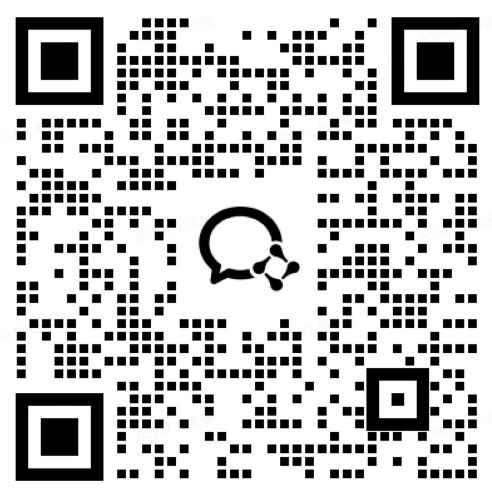
Community
Join our WeChat group to get help, share feedback, and stay up to date:
Contributing
- Fork this repository
- Create your feature branch (
git checkout -b feature/your-feature) - Commit your changes (
git commit -m 'feat: add something') - Push to the branch (
git push origin feature/your-feature) - Open a Pull Request
Please include in your PR description: a summary of changes, linked issue (if any), screenshots for UI changes, and notes on any Electron-specific behavior changes.
License
Star History
Built and maintained by NetEase Youdao.